
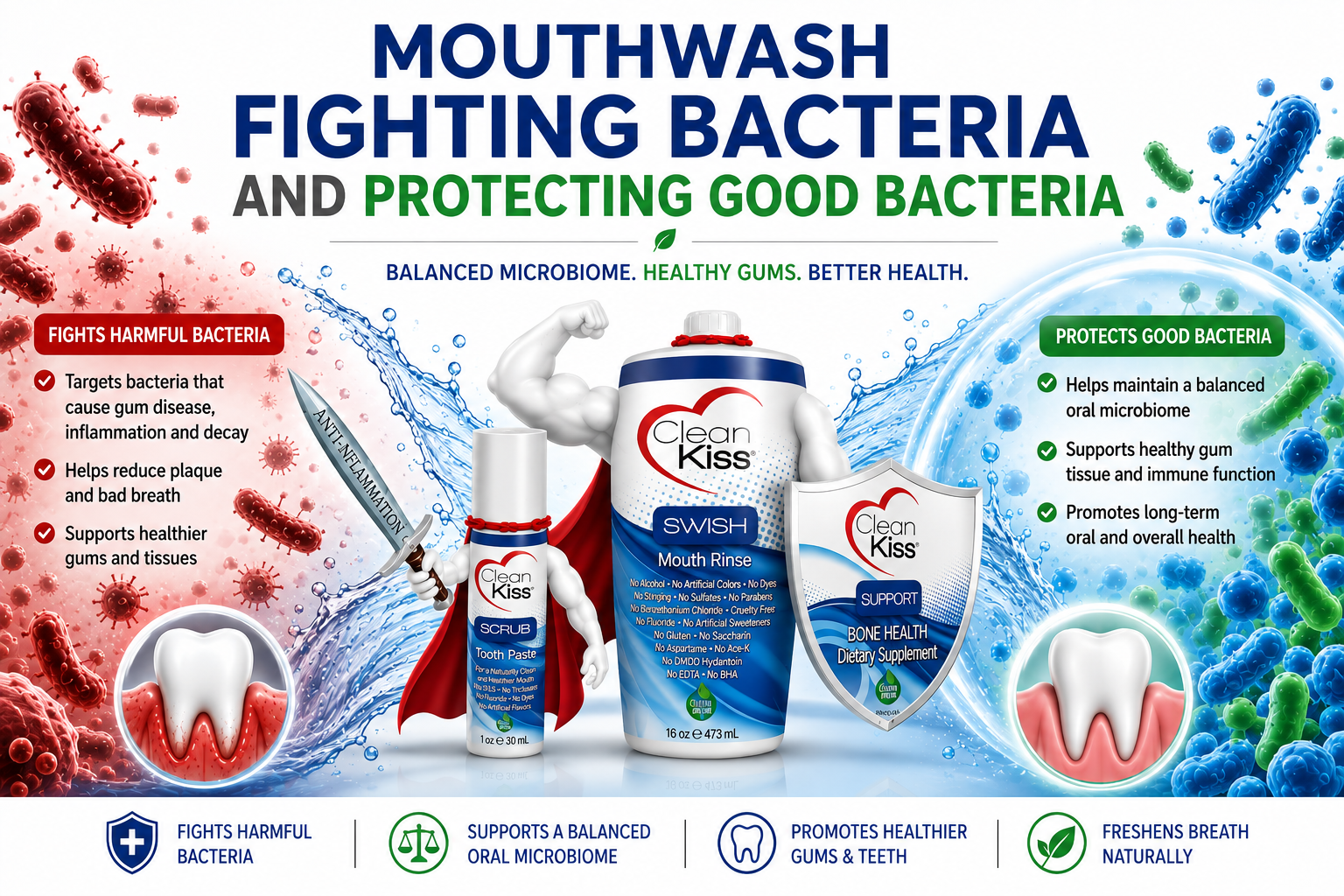
It’s Not About Killing More Bacteria—It’s About Supporting the Right Bacteria
When most people shop for a mouthwash, they assume the strongest germ killer must be the best choice.
But today’s research tells a different story.
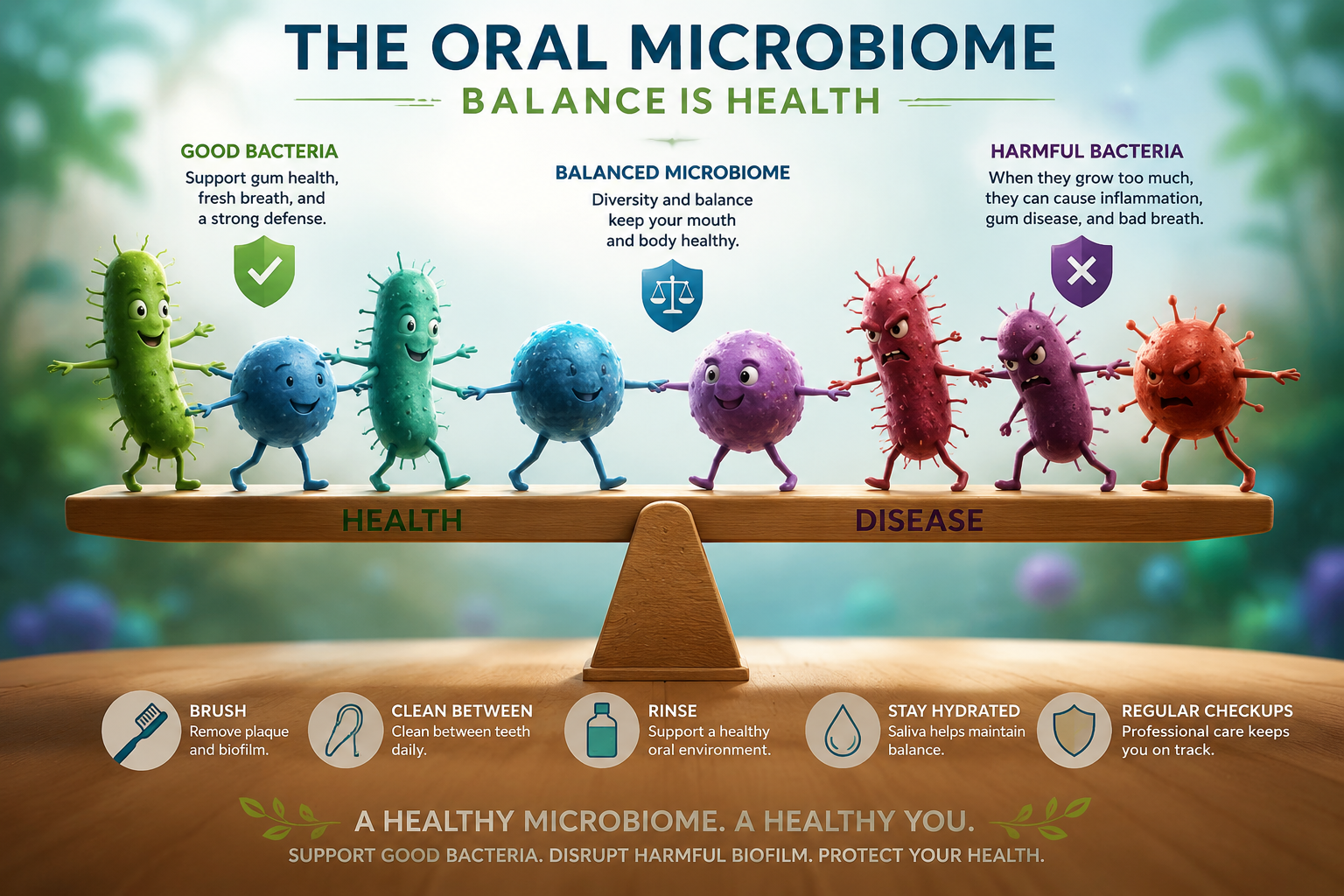
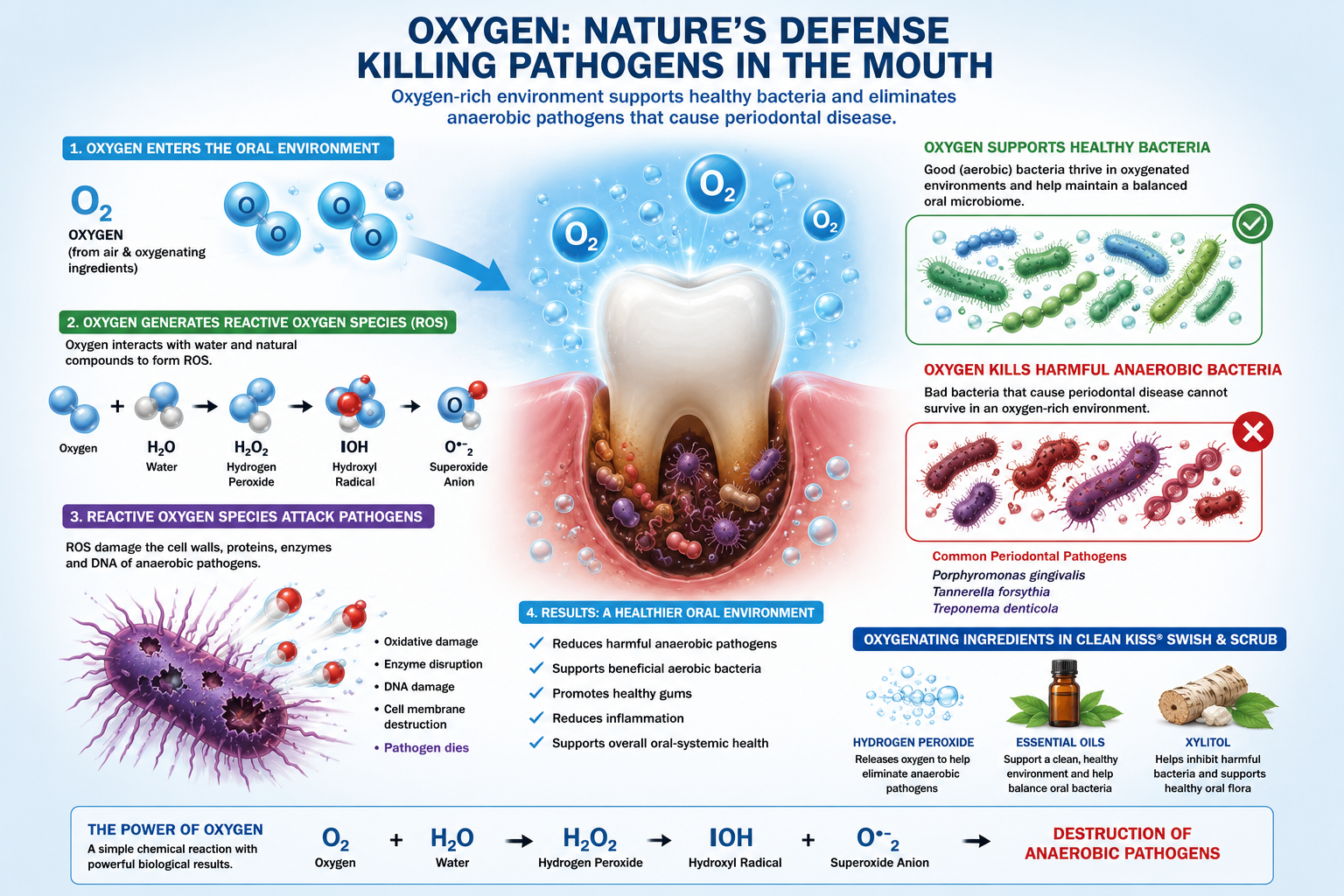
Your mouth contains more than 700 species of bacteria, and most of them are actually beneficial. A healthy mouth depends on maintaining a balanced oral microbiome—a thriving community of good bacteria that keeps harmful bacteria under control.
The best mouthwash isn’t necessarily the one that kills the most bacteria.
It’s the one that reduces harmful pathogens while preserving the healthy ecosystem your mouth needs to protect your gums, teeth, and overall health.
Why Periodontal Disease Develops
Periodontal disease isn’t caused simply by “having bacteria.”
Everyone has bacteria.
The problem begins when the balance shifts toward disease-causing organisms that thrive in:
- Low oxygen environments
- Thick dental plaque and biofilm
- Inflamed gum tissue
- Acidic conditions
- Poor oral hygiene
- Reduced saliva flow
- High sugar diets
As these harmful bacteria multiply, they trigger inflammation that destroys the gums and bone supporting the teeth.
The goal of treatment should be restoring microbial balance—not sterilizing the mouth.
Prescription Chlorhexidine: The Nuclear Option
For decades, dentists have prescribed chlorhexidine gluconate (CHX) as the gold standard for controlling severe gingivitis and periodontal infections.
Benefits
- Excellent short-term reduction of plaque
- Rapid decrease in harmful bacteria
- Useful immediately after periodontal surgery
- Helpful during acute periodontal infections
For these reasons, chlorhexidine remains an important therapeutic tool when used appropriately.
The Drawbacks
The problem is that chlorhexidine is non-selective.
It doesn’t distinguish between beneficial bacteria and harmful bacteria.
Research has shown that even one week of chlorhexidine use significantly alters the oral microbiome, reducing bacterial diversity, lowering saliva pH, decreasing buffering capacity, reducing nitric oxide production, and creating a more acidic oral environment. Researchers also observed changes associated with reduced salivary and plasma nitrite levels and a trend toward higher systolic blood pressure.
Other common side effects include:
- Tooth staining
- Altered taste
- Increased tartar buildup
- Burning sensation
- Long-term disruption of the oral microbiome
For these reasons, chlorhexidine is generally recommended for short-term use only, not as an everyday mouthwash.
Over-the-Counter Mouthwashes
Most over-the-counter mouthwashes fall into one of three categories:
- Alcohol-based antiseptics
- Cetylpyridinium chloride (CPC)
- Cosmetic breath fresheners
Many provide temporary fresh breath.
Some reduce plaque modestly.
However, many are designed primarily to suppress bacteria rather than improve the biological environment that supports healthy gums.
Alcohol-containing rinses may also contribute to dry mouth in susceptible individuals, reducing one of the body’s most important natural defenses—saliva.
Fresh breath alone is not the same as a healthy microbiome.
The New Goal: A Balanced Oral Microbiome
Modern periodontal therapy has shifted from trying to eliminate bacteria toward encouraging a healthy bacterial balance.
Healthy bacteria perform essential functions:
- Compete against periodontal pathogens
- Help regulate inflammation
- Maintain a healthier oral pH
- Support nitric oxide production
- Protect gum tissues
- Reduce biofilm overgrowth
Instead of trying to sterilize the mouth, we should create an environment where beneficial bacteria flourish and harmful bacteria struggle to survive.
How Clean Kiss Therapeutic Swish Takes a Different Approach
Clean Kiss Therapeutic Swish was developed with a different philosophy.
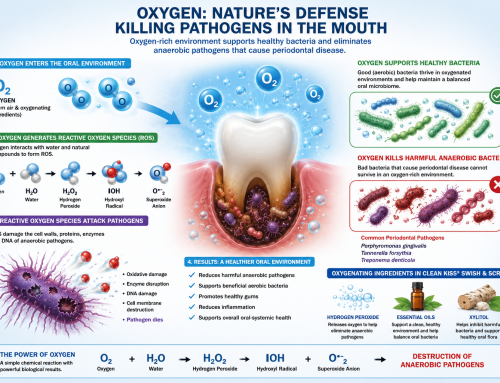
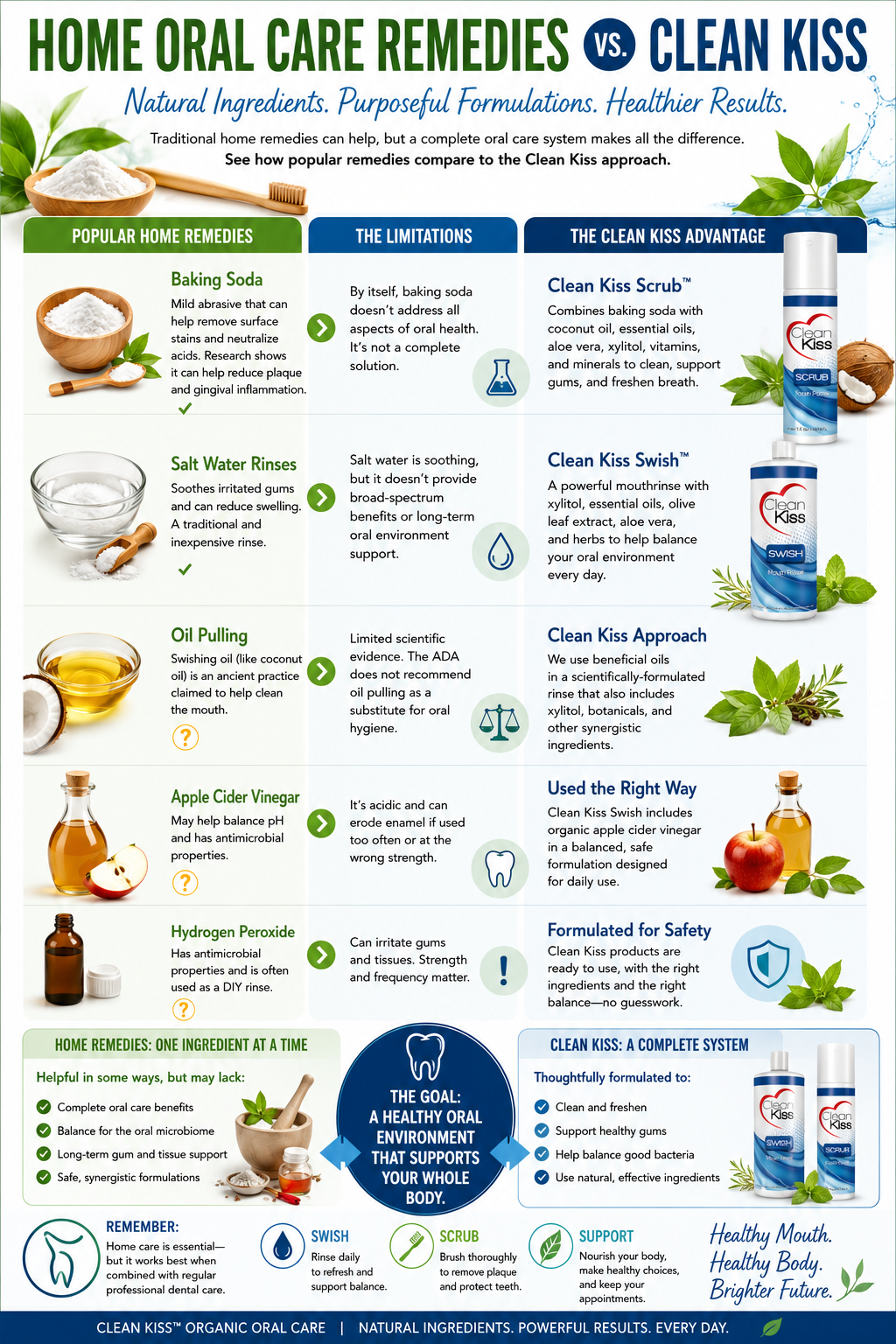
Rather than relying on harsh chemicals, it combines naturally derived ingredients that help reduce disease-causing bacteria while supporting the oral environment needed for long-term health. According to Clean Kiss, its formulation includes diluted apple cider vinegar, xylitol, aloe vera, olive leaf extract, tea tree oil, sage, peppermint oil, and a proprietary blend of essential oils and herbs designed to target harmful bacteria while promoting healthier oral conditions.
Key ingredients include:
- Apple cider vinegar
- Xylitol
- Aloe Vera
- Olive Leaf Extract
- Tea Tree Oil
- Sage
- Organic Peppermint Oil
- Essential oils and herbal extracts
These ingredients are intended to:
- Help reduce pathogenic bacteria
- Support healthier gum tissues
- Encourage oxygenation of the oral environment
- Promote healthier saliva
- Help maintain a balanced pH
- Freshen breath naturally
Unlike prescription chlorhexidine, Clean Kiss is designed for daily use as part of a long-term oral wellness program rather than a short-term pharmaceutical intervention. (Clinical outcomes depend on individual patients, and Clean Kiss should not be viewed as a substitute for professional periodontal care.)
Comparison at a Glance
| Feature | Chlorhexidine | Typical OTC Mouthwash | Clean Kiss Therapeutic Swish |
|---|---|---|---|
| Primary Purpose | Prescription treatment of acute gum disease | Fresh breath and plaque reduction | Daily oral microbiome support |
| Kills Harmful Bacteria | ✔ Excellent | Moderate | Designed to target disease-causing bacteria |
| Preserves Beneficial Bacteria | Limited | Varies | Formulated with microbiome balance in mind |
| Long-Term Daily Use | Not generally recommended | Usually acceptable | Designed for daily use |
| Tooth Staining | Common | Rare | No chlorhexidine-related staining |
| Taste Changes | Common | Rare | Natural botanical flavor profile |
| Supports Healthy Oral Environment | Limited | Limited | Focuses on pH, saliva, and healthy tissues |
The Bottom Line
Reducing periodontal disease isn’t about creating a sterile mouth.
It’s about restoring balance.
Prescription chlorhexidine remains an excellent short-term therapeutic tool when prescribed by a dentist for specific clinical situations. But long-term periodontal health depends on much more than killing bacteria.
It depends on creating an environment where beneficial bacteria can thrive while disease-causing organisms lose their advantage.
That’s why many oral-systemic health practitioners are moving beyond simply asking:
“How can we kill bacteria?”
Instead, they’re asking:
“How can we help the right bacteria win?”
A balanced oral microbiome is one of the most important foundations of healthy gums, successful dental treatment, and better overall health.

Leave A Comment