
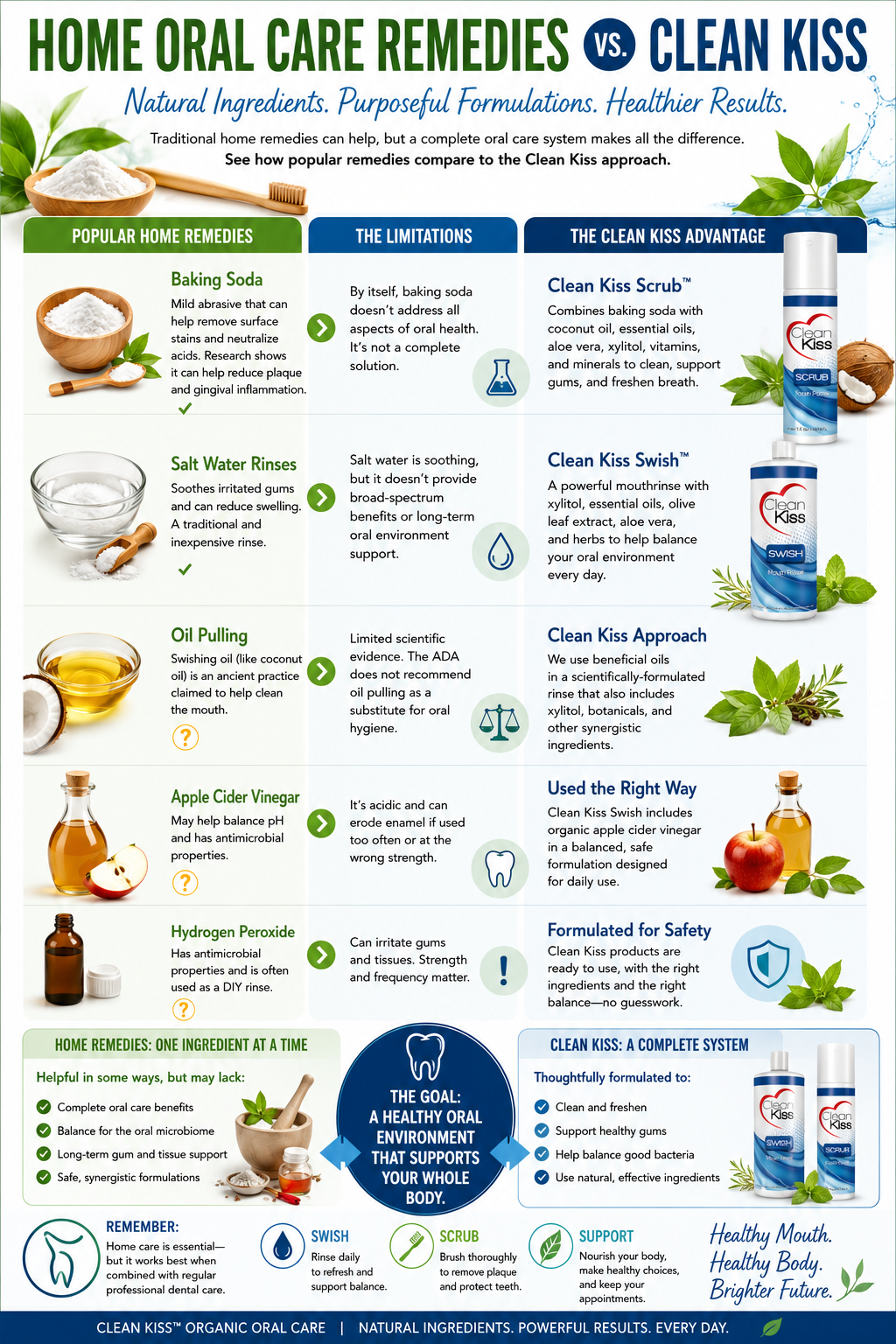
Baking soda. Salt water. Coconut oil. Hydrogen peroxide. Apple cider vinegar. Essential oils.
For generations, people have used simple ingredients from the kitchen or medicine cabinet to care for their teeth and gums.
Some of these traditional remedies have legitimate benefits. Others are supported mostly by anecdotal experience. And some can actually cause problems when used incorrectly or too frequently.
So how do traditional home remedies compare with a purpose-designed oral-care system such as Clean Kiss™?
The answer begins with an important question:
Are you simply cleaning your mouth—or are you trying to create a healthier oral environment?
The Goal Isn’t Just “Clean Teeth”
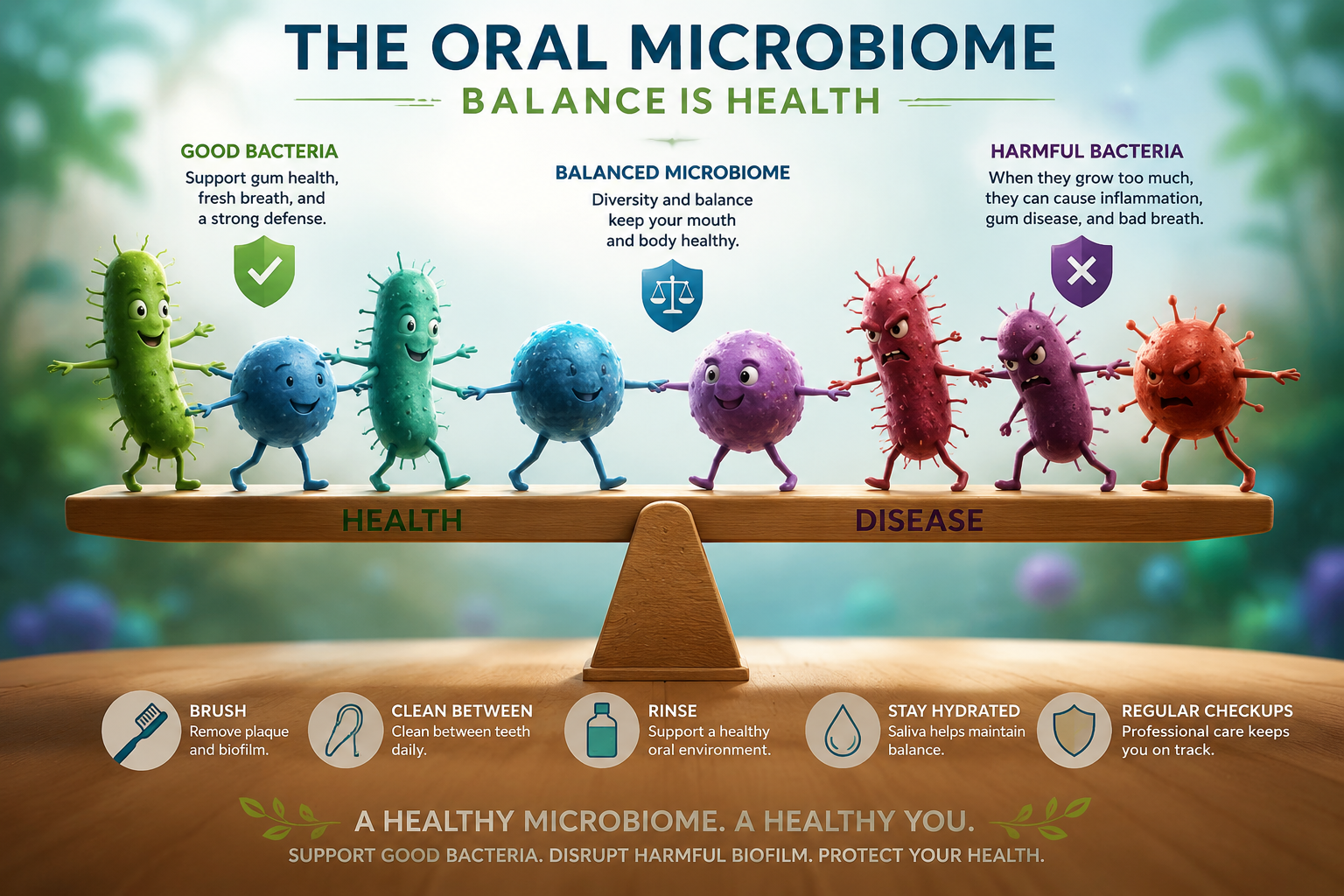
Your mouth is a living ecosystem.
It contains hundreds of microorganisms, including bacteria that can contribute to tooth decay and periodontal disease, as well as bacteria that are part of a healthy oral environment.
That means effective oral care isn’t necessarily about killing everything.
It is about controlling harmful plaque and disease-associated bacteria while supporting the tissues and microbial environment of the mouth.
The American Dental Association recommends brushing twice daily for two minutes with fluoride toothpaste and cleaning between the teeth daily.
Clean Kiss takes a different approach to home care, emphasizing naturally derived ingredients and a combination of cleansing, plaque control, gum support, and oral-environment management.
Let’s Compare the Most Popular Home Remedies
1. Baking Soda
The traditional approach:
Baking soda has been used for decades as a simple tooth-cleaning ingredient. It is mildly abrasive and alkaline, which can help remove surface deposits and neutralize acids.
And unlike some home remedies, baking soda actually has research behind it.
A systematic review of 21 publications found that baking-soda dentifrices showed benefits for plaque removal, with some evidence of reduced gingival bleeding. Another 2022 systematic review and meta-analysis found that a 67% sodium-bicarbonate toothpaste improved plaque, bleeding, and gingival indices in people with gingivitis.
The limitation:
Baking soda by itself doesn’t provide a complete oral-care system.
It doesn’t address every aspect of oral hygiene, and simply putting baking soda on a toothbrush doesn’t create a carefully formulated toothpaste.
Clean Kiss Scrub™
Clean Kiss Scrub uses baking soda as part of a formulated toothpaste, combined with ingredients including coconut oil, tea tree, rosemary and clove oils, vitamin E, aloe vera, olive leaf extract, MSM, peppermint oil, xylitol, green tea extract, vitamin B12 and trace minerals.
The idea is simple:
Don’t just use one ingredient. Combine complementary ingredients into a daily oral-care system.
2. Salt Water Rinses
The traditional approach:
Warm salt water has long been used as a soothing oral rinse, particularly when gums are irritated or after certain dental procedures.
It is inexpensive, readily available, and simple.
But salt water is primarily a rinse—it isn’t a complete replacement for brushing, interdental cleaning, or professional periodontal care.
Clean Kiss Swish™
Clean Kiss Swish is designed as a more comprehensive daily rinse.
Its formulation includes organic apple cider vinegar, xylitol, organic peppermint oil, olive leaf extract, tea tree oil, sage, aloe vera, citric acid, and a proprietary blend of essential oils and herbs.
Rather than relying on a single household ingredient, Clean Kiss combines multiple ingredients selected for different functions within the oral-care routine.
3. Oil Pulling
The traditional approach:
Oil pulling involves swishing edible oil—often coconut, sesame, or sunflower oil—in the mouth.
It has become extremely popular among people looking for a natural alternative to conventional mouthwash.
But here’s where consumers need to be careful.
The American Dental Association states that there isn’t reliable evidence that oil pulling reduces cavities, whitens teeth, or improves overall oral health, and it does not recommend oil pulling as a dental-hygiene practice.
A more recent systematic review found some evidence of effects on certain oral-health measures, but the evidence base remains limited and oil pulling should not be considered a replacement for established oral hygiene.
The Clean Kiss Difference
Clean Kiss does incorporate oils—but not simply as an oil-pulling practice.
Swish combines selected oils and botanical extracts with other ingredients such as xylitol, apple cider vinegar, aloe vera and olive leaf extract in a formulated mouthrinse.
The difference is important:
Oil pulling is a traditional practice. Clean Kiss is a formulated oral-care product.
4. Hydrogen Peroxide
Hydrogen peroxide is another popular DIY oral remedy.
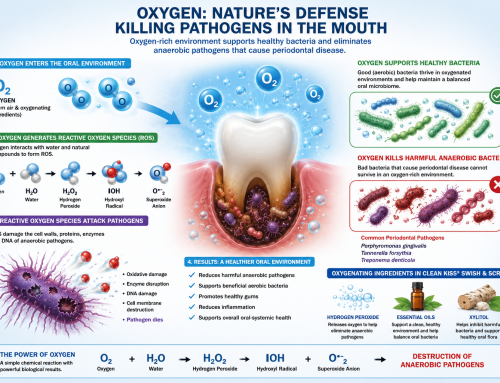
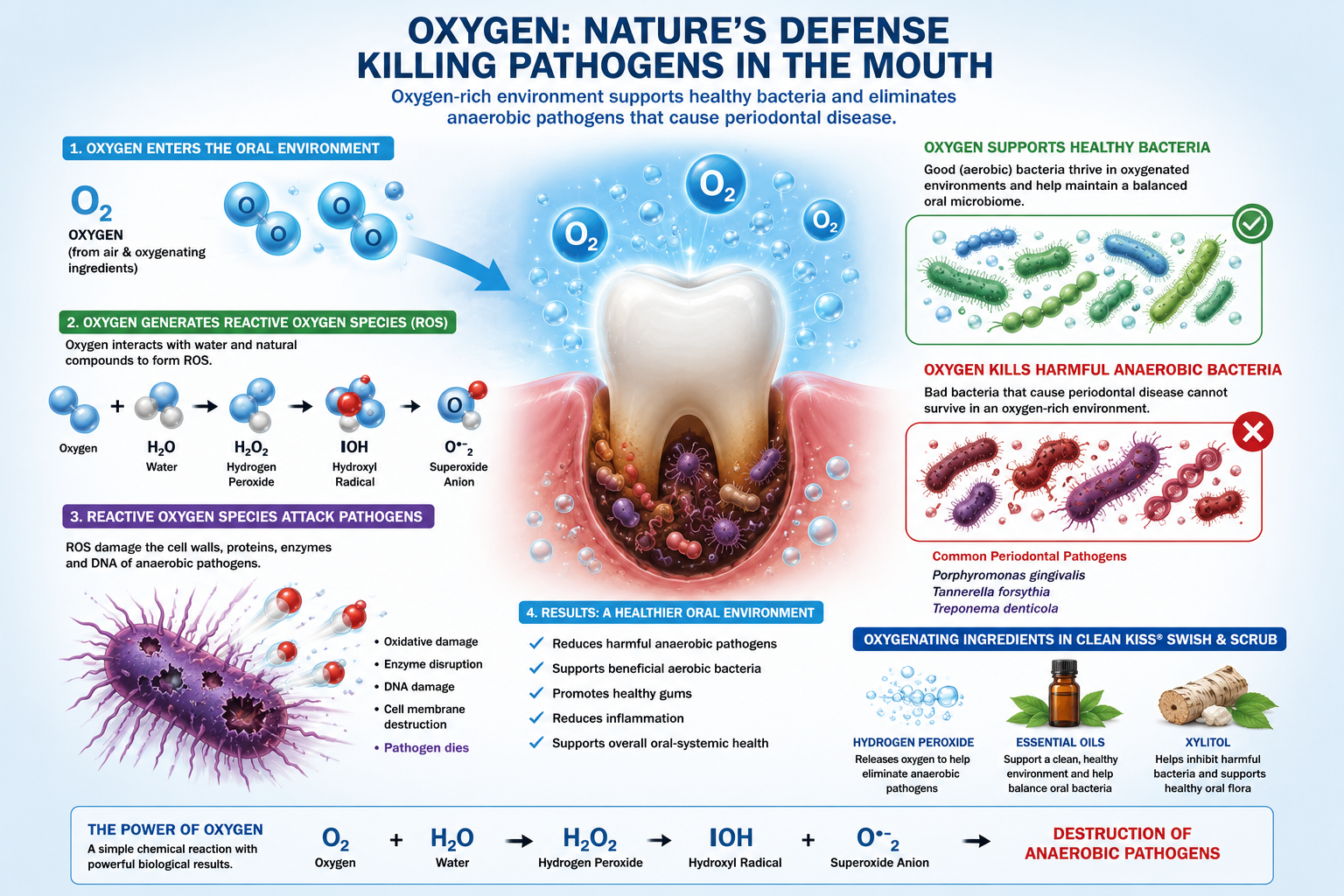
People commonly use diluted peroxide as a rinse because of its oxidizing and antimicrobial properties.
But stronger is not necessarily better.
Concentrated or improperly used peroxide can irritate oral tissues. Using a household product without understanding concentration, frequency, or appropriate application can create unnecessary risk.
Clean Kiss Takes a Formulated Approach
Instead of asking consumers to experiment with household chemicals, Clean Kiss provides a ready-to-use oral-care formulation with defined ingredients and intended directions.
That distinction matters.
Natural does not automatically mean safe—and DIY does not automatically mean better.
5. Apple Cider Vinegar
Apple cider vinegar has become a popular natural-health ingredient.
It is also one of the ingredients in Clean Kiss Swish.
But there is an important difference between using apple cider vinegar straight from the kitchen cabinet and using it as part of a formulated oral-care product.
Apple cider vinegar is acidic. Repeated exposure to acids can contribute to enamel erosion, particularly when used improperly.
Clean Kiss Swish is formulated around apple cider vinegar and other ingredients, and the company’s directions specifically incorporate the product into a broader brushing routine rather than presenting vinegar as a stand-alone tooth-care solution.
The Lesson?
An ingredient isn’t necessarily good or bad.
How it is formulated, how it is used, how often it is used, and what it is combined with all matter.
The Biggest Difference: Ingredients vs. a System
This is where Clean Kiss moves beyond the typical home remedy.
A kitchen remedy generally focuses on one ingredient.
A formulated oral-care system can bring multiple ingredients together for specific purposes.
Traditional home remedies might provide:
- Baking soda → mechanical cleaning and alkalinity
- Salt water → soothing rinse
- Coconut oil → traditional oil pulling
- Apple cider vinegar → acidic rinse
- Essential oils → flavor and antimicrobial properties
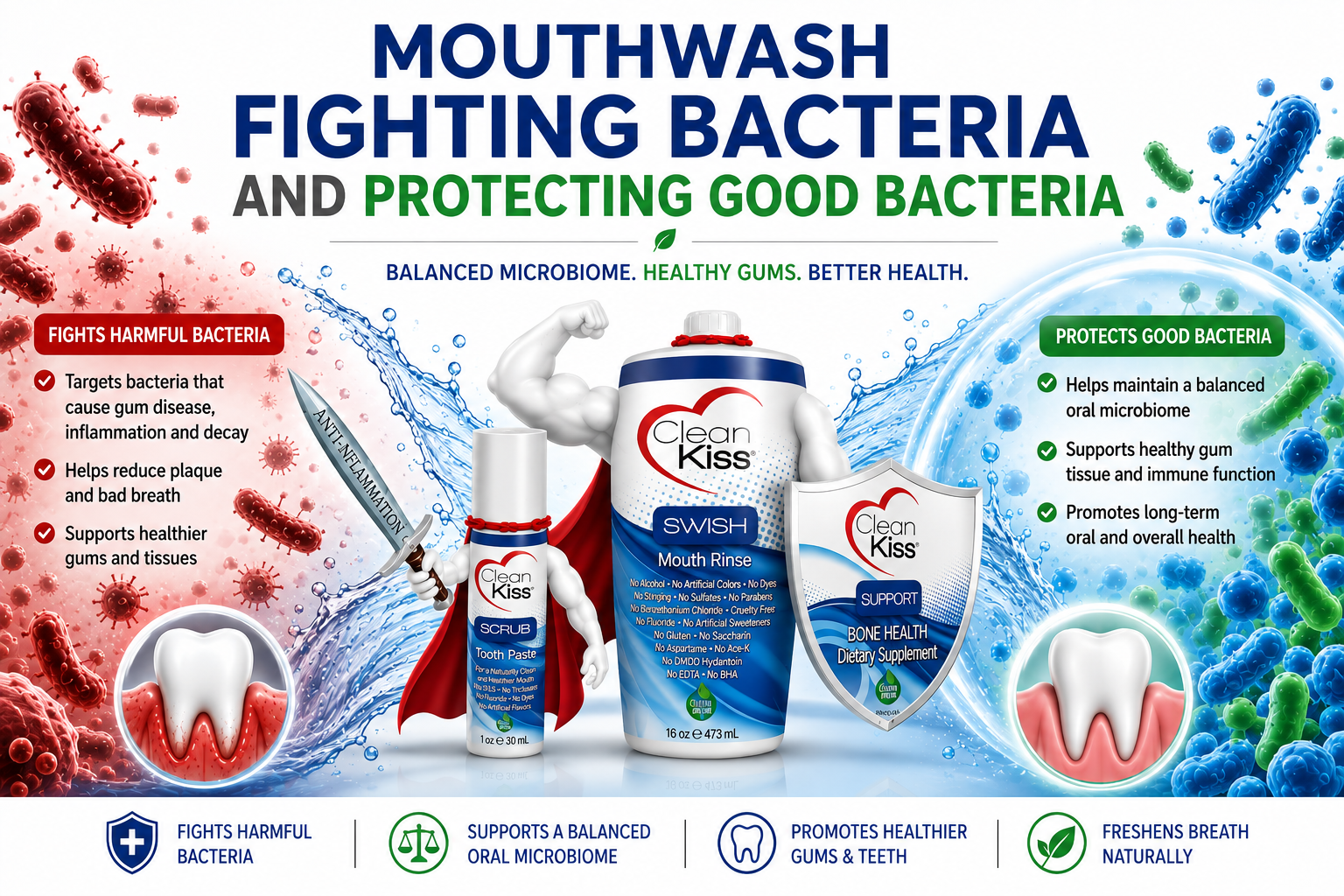
Clean Kiss combines multiple approaches:
Swish™
A formulated mouthrinse containing apple cider vinegar, xylitol, peppermint oil, olive leaf extract, tea tree oil, sage, aloe vera, citric acid and a proprietary botanical blend.
Scrub™
A toothpaste formulated with baking soda, coconut oil, botanical oils and extracts, vitamin E, aloe vera, MSM, xylitol, green tea extract, vitamin B12 and trace minerals.
The Clean Kiss philosophy is therefore not:
“Find one magic ingredient.”
It is:
Combine multiple tools into a consistent daily routine.
What About Fluoride?
This is an important distinction between Clean Kiss and conventional toothpaste.
The American Dental Association recommends brushing twice daily with fluoride toothpaste because fluoride has strong evidence for preventing dental caries.
Clean Kiss Scrub is formulated without fluoride, according to the company’s product information.
That means consumers should understand that Clean Kiss represents a different oral-care philosophy from conventional fluoride toothpaste.
If you are at elevated risk for cavities, have a history of extensive decay, dry mouth, exposed roots, or other risk factors, discuss your toothpaste choice with your dentist.
Natural oral care should still be evidence-informed oral care.
Don’t Confuse Home Care With Professional Care
There is another critical point.
No toothpaste, mouthwash, salt-water rinse, or oil can replace a professional periodontal examination when periodontal disease is present.
Periodontal pockets can harbor bacteria below the gumline where ordinary brushing cannot adequately reach.
Professional assessment can identify:
- Bleeding
- Periodontal pocket depth
- Bone loss
- Recession
- Mobility
- Infection
- Plaque and calculus
- Risk factors for periodontal disease
Home care is what you do every day.
Professional care is what helps determine what your mouth actually needs.
You need both.
The Clean Kiss Philosophy: Swish. Scrub. Support.
Clean Kiss is built around a simple concept:
Swish
Use a formulated rinse to help cleanse areas throughout the mouth.
Scrub
Use a formulated toothpaste with a toothbrush to mechanically remove plaque and debris.
Support
Support the mouth and body through appropriate nutrition, oral hygiene, professional care, and—when appropriate—additional oral-health products.
This philosophy fits naturally into the broader Meditz Method™, which views oral health as part of whole-body health rather than as an isolated dental issue.
So Which Is Better?
The honest answer is:
It depends on the remedy.
Some traditional approaches have legitimate evidence behind them.
Baking soda, for example, has demonstrated benefits when formulated into toothpaste.
Other popular remedies, such as oil pulling, have considerably weaker evidence and should not replace established oral hygiene.
And some DIY practices can become harmful when ingredients are too concentrated or used too frequently.
The advantage of a formulated product is consistency.
Instead of standing in the kitchen wondering:
“How much baking soda should I use?”
“Should I add peroxide?”
“How long should I swish coconut oil?”
“Can I use apple cider vinegar every day?”
you have a product specifically formulated and labeled for oral use.
Your Mouth Deserves More Than a Quick Fix
Your mouth is working 24 hours a day.
You eat with it.
You breathe through it.
You speak with it.
You live with billions of microorganisms in it.
And when periodontal inflammation develops, the problem isn’t necessarily limited to your teeth and gums.
That’s why home oral care deserves more thought than simply asking:
“What will make my teeth feel clean?”
The better question is:
“What can I do every day to support a healthier mouth?”
Clean Kiss was created around that question.
Not a single miracle ingredient.
Not a temporary fix.
But a daily oral-care system designed to make healthy habits simple and consistent.
Swish.
Scrub.
Support.
And don’t forget: your mouth is part of your whole body.
Learn more about Clean Kiss Organic Oral Care:
Clean Kiss Oral Healthcare

Leave A Comment