
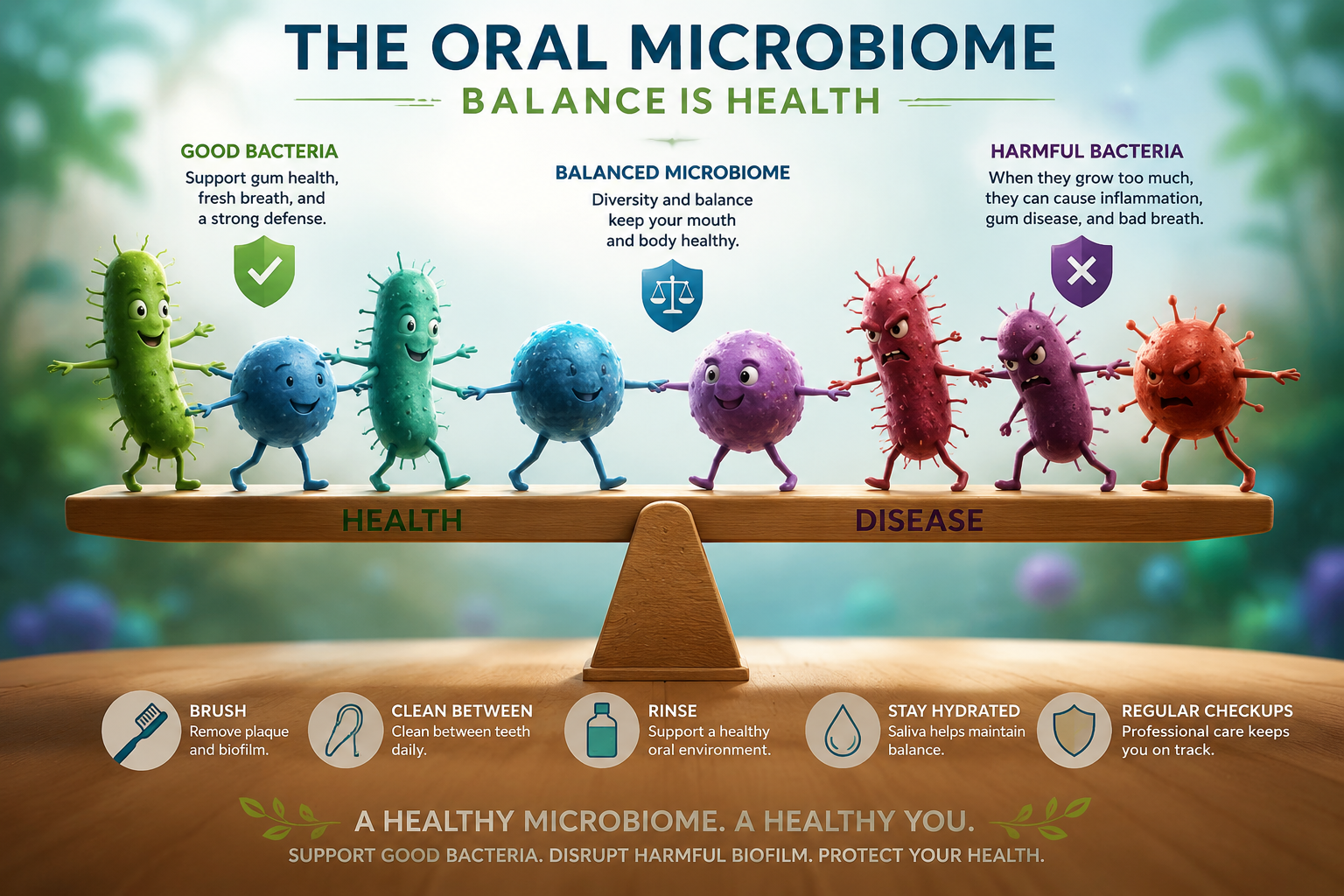
Your mouth is home to billions of microorganisms.
Some are beneficial. Some are harmless. And some can contribute to disease when they become too abundant or move into areas where they do not belong.
Together, these microorganisms make up your oral microbiome—a complex ecosystem that lives on your teeth, tongue, gums, cheeks, and throughout your mouth.
The goal of oral health shouldn’t simply be to eliminate bacteria.
The goal is to create an environment where beneficial bacteria can thrive while disease-associated bacteria are kept under control.
That distinction changes the way we should think about brushing, mouthwash, gum health, and daily oral care.
A Healthy Mouth Is an Ecosystem—Not a Sterile Environment
For decades, oral hygiene has often been approached as a battle against bacteria.
Brush harder.
Kill more bacteria.
Use stronger antiseptic products.
But your mouth isn’t supposed to be sterile.
A healthy oral microbiome contains a diverse community of microorganisms that interact with your teeth, gums, saliva, immune system, and the environment around them.
Beneficial microorganisms can help maintain balance and occupy ecological space that could otherwise be taken over by organisms associated with inflammation and periodontal disease.
When that balance is disrupted, a process called dysbiosis can occur.
Dysbiosis is an imbalance in the microbial community. In the mouth, it can be associated with plaque accumulation, gingival inflammation, periodontal disease, bad breath, and other oral problems.
So the better question isn’t:
“How do I kill all the bacteria in my mouth?”
It is:
“How do I create an environment that favors health?”
How Can You Tell If Your Oral Microbiome Is Healthy?
You can’t determine the exact composition of your oral microbiome simply by looking in a mirror. Advanced microbial testing can provide much more information.
However, your mouth can provide important clues.
Signs That Your Oral Environment May Be Healthy
A healthy oral environment generally includes:
- Gums that are pink and firm
- Little or no bleeding when brushing or flossing
- Minimal swelling or tenderness
- Fresh breath
- Low plaque accumulation
- Healthy saliva flow
- Teeth that are relatively free from persistent biofilm
- No unexplained gum recession or periodontal pockets
- Little chronic inflammation
Warning Signs of Microbial Imbalance
Pay attention to:
- Bleeding gums
- Persistent bad breath
- Red or swollen gums
- Tender gums
- Increasing plaque or tartar
- Pus around the gums
- Gum recession
- Loose teeth
- Deep periodontal pockets
- Repeated episodes of gum inflammation
These signs don’t prove that a particular harmful bacterium is present, but they are reasons to have your oral health professionally evaluated.
And importantly, periodontal disease can sometimes progress with surprisingly few symptoms.
That is why periodontal measurements and appropriate dental examinations are so important.
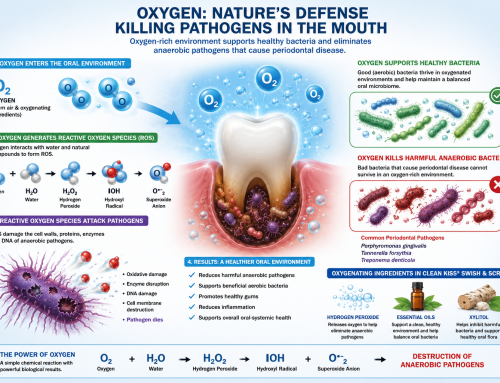
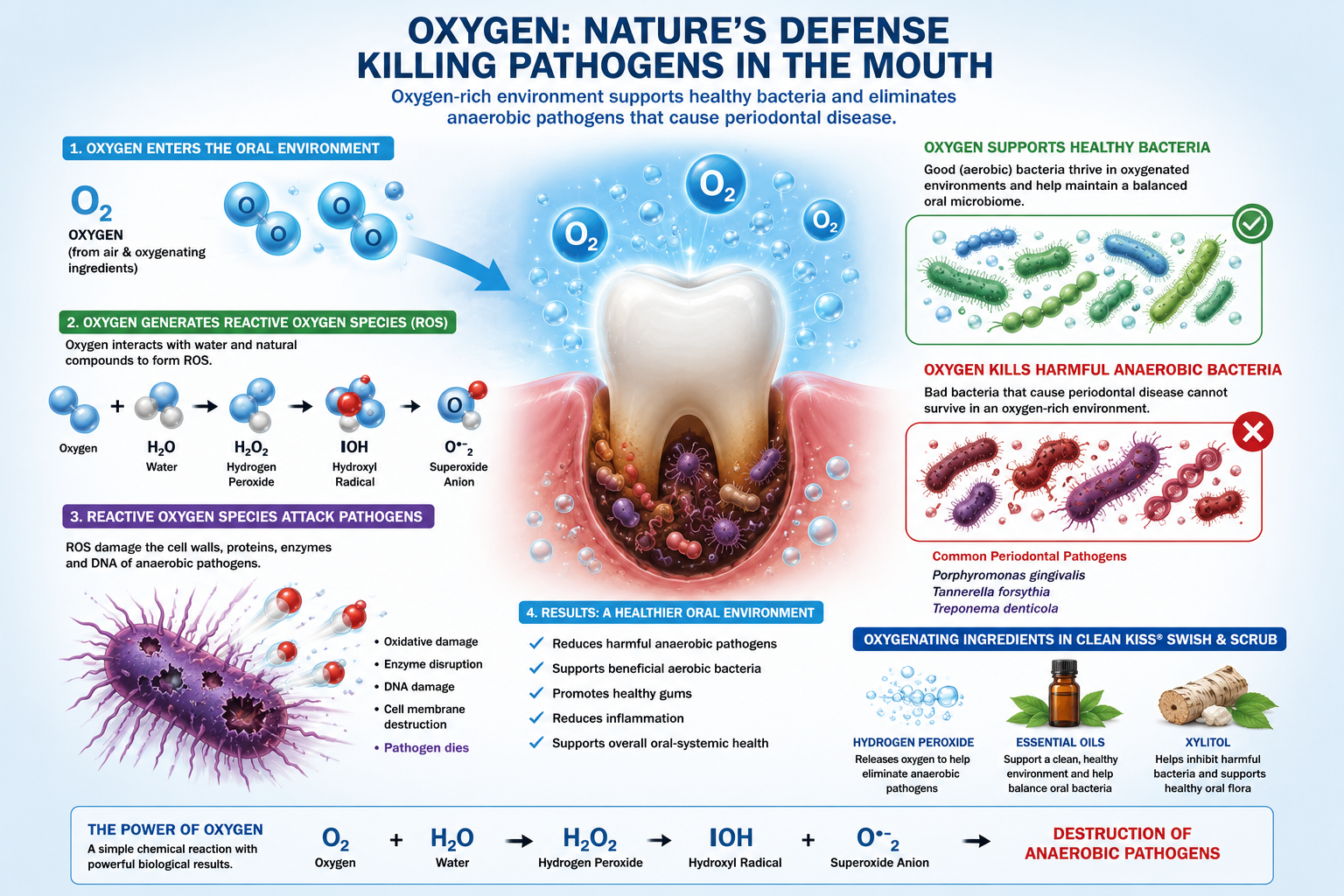
Oxygen: An Important Part of the Oral Environment
One of the most interesting characteristics of the oral microbiome is that different microorganisms prefer different environments.
Some microorganisms associated with periodontal disease are particularly well adapted to environments with limited oxygen.
Healthy oral tissues, saliva, chewing, and normal circulation all contribute to the constantly changing environment inside the mouth.
This raises an important concept:
Could oral care help create an environment that is less favorable to disease-associated microorganisms while supporting a healthier microbial balance?
Oxygenation is one piece of that equation.
But it is important to be precise.
It would be an overstatement to say that simply “adding oxygen” to the mouth kills every pathogenic bacterium. Oral microbiology is much more complicated than that. Different microorganisms have different oxygen tolerances, and periodontal disease involves complex interactions among bacteria, biofilms, host immunity, inflammation, and tissue conditions.
The goal should be to shift the environment toward health, not attempt to sterilize the mouth.
Where Clean Kiss Fits In
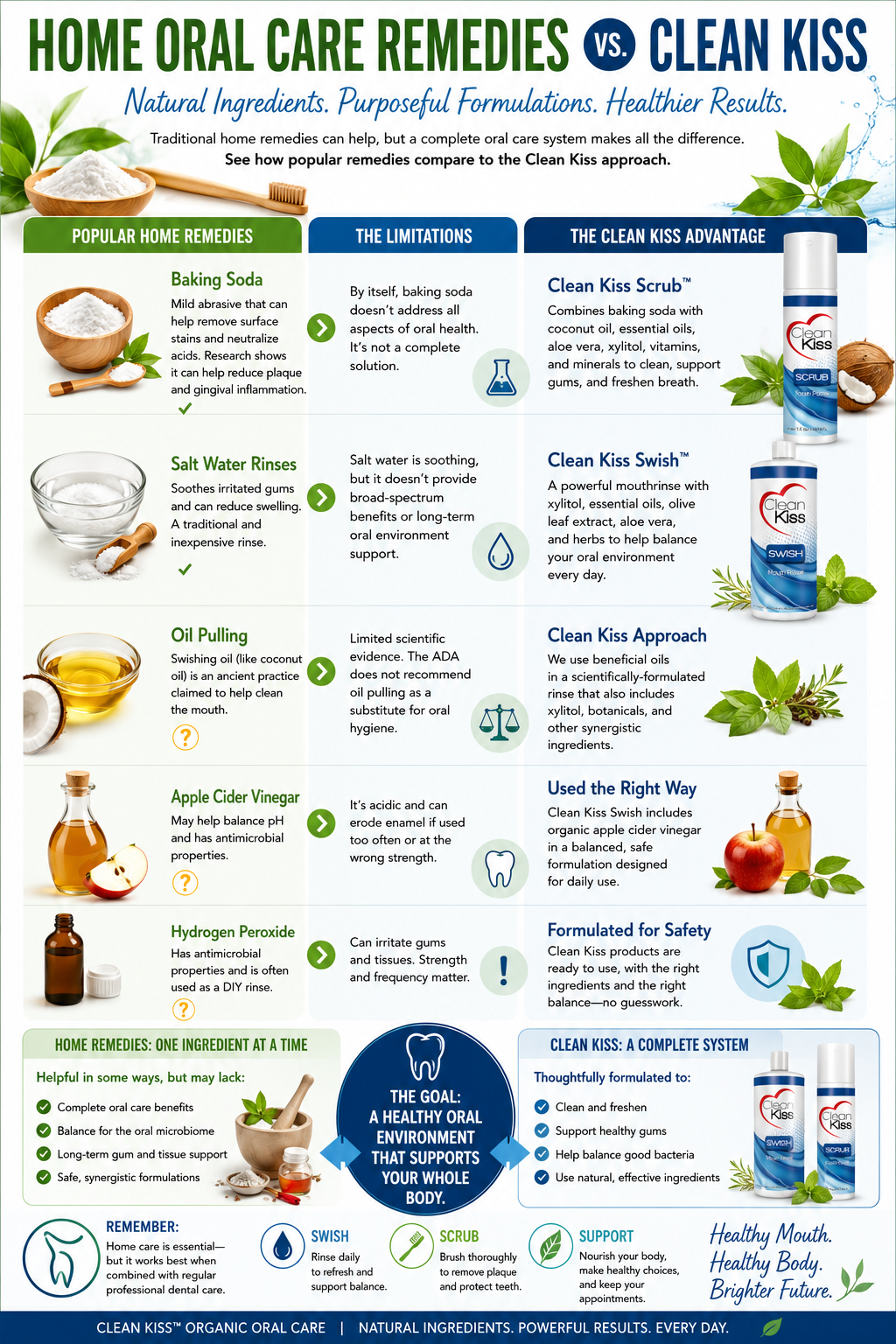
This is the philosophy behind the Clean Kiss approach to daily oral care.
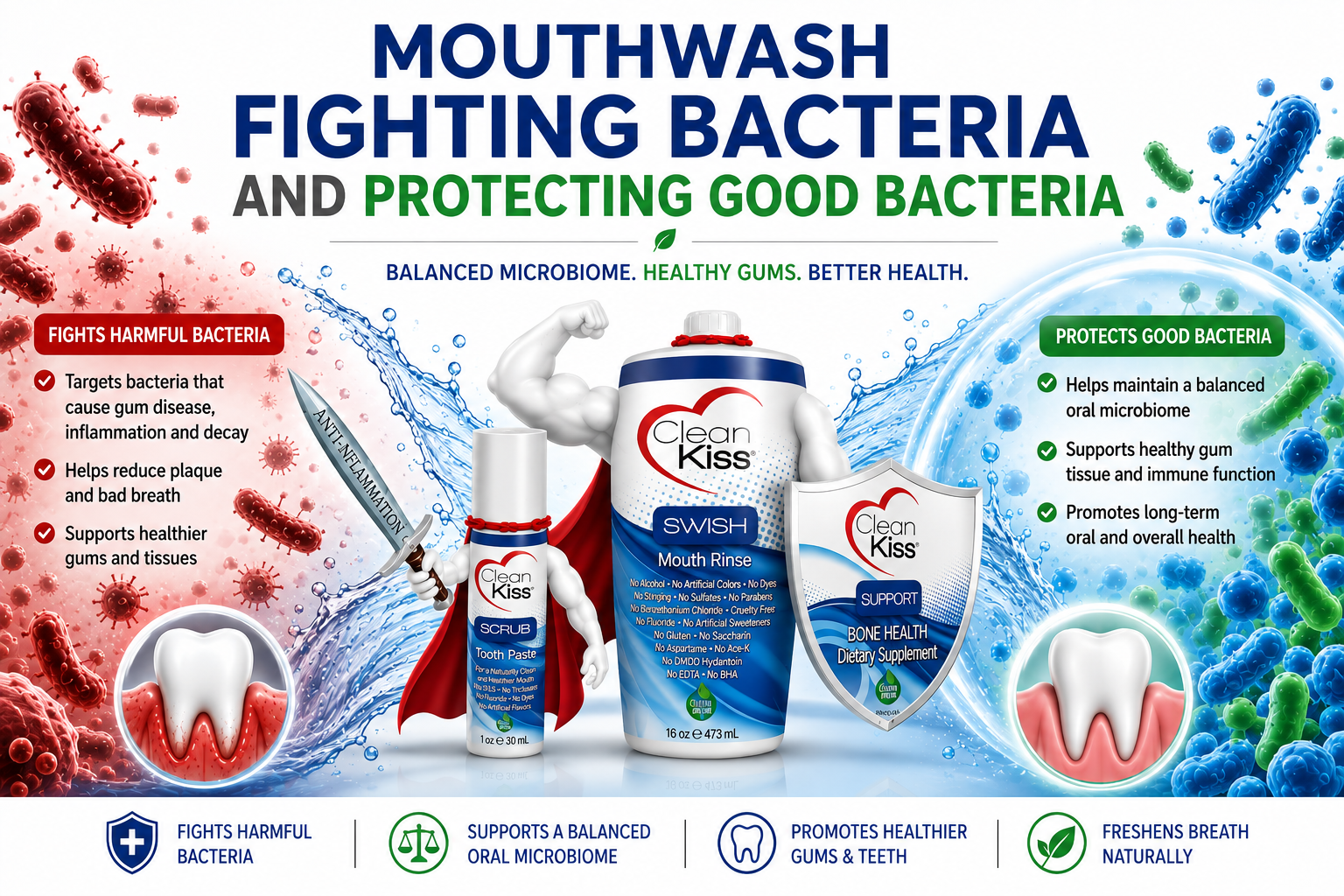
Clean Kiss Swish Mouthwash and Clean Kiss Scrub Toothpaste are designed to support a healthier oral environment while addressing microorganisms associated with oral disease.
The concept is different from simply trying to wipe out everything in the mouth.
Instead, daily oral care can be viewed as environmental management:
Remove the harmful biofilm.
Support the oral environment.
Protect healthy tissues.
Encourage conditions in which beneficial microorganisms can flourish.
Clean Kiss Swish is formulated with ingredients intended to provide an oxygenative oral-care environment while helping reduce unwanted microorganisms.
Clean Kiss Scrub provides mechanical biofilm removal through brushing while delivering its oral-care ingredients to the surfaces of the teeth and gums.
Together, the products can become part of a daily routine focused on maintaining a healthier oral ecosystem.
Good Bacteria Need the Right Environment, Too
One of the biggest misconceptions about oral health is that all bacteria are the enemy.
They’re not.
Your oral microbiome is an ecosystem.
If you destroy an ecosystem indiscriminately, you don’t necessarily create a healthier ecosystem. You may simply create an environment that eventually becomes recolonized.
That is why the long-term objective should be balance.
Think of your mouth like a garden.
You don’t want an empty garden.
You want the right plants growing in the right conditions while weeds are prevented from taking over.
Your oral microbiome works in a similar way.
The goal is not necessarily “zero bacteria.”
The goal is microbial balance.
Biofilm Is the Real Target
Another important distinction is the difference between bacteria floating freely in saliva and bacteria living inside a mature biofilm.
Dental plaque is a biofilm.
Inside a biofilm, microorganisms can communicate, exchange nutrients, and create an environment that protects the microbial community from outside influences.
This is one reason mechanical disruption is so important.
Brushing and interdental cleaning physically disturb the biofilm.
Mouthwash can then provide another layer of chemical and environmental support.
That combination is much more logical than relying on mouthwash alone.
Oxygenation + Mechanical Cleaning + Healthy Habits
A healthy oral-care routine should work on multiple levels.
1. Disrupt the Biofilm
Brush thoroughly twice a day and clean between your teeth.
2. Support the Oral Environment
Use an oral-care product designed to help maintain an environment that is less favorable to disease-associated microorganisms.
3. Don’t Forget the Gums
The gumline is where the battle often begins.
Plaque accumulating along and below the gumline can contribute to inflammation and periodontal disease.
4. Support Saliva
Saliva is one of your mouth’s most important natural defenses. Hydration and healthy salivary flow help maintain the oral environment.
5. Look Beyond the Teeth
Your gums are living tissue.
Persistent inflammation shouldn’t be dismissed as simply a dental problem. Periodontal health is an important part of overall health and deserves professional attention.
The Healthy Mouth Test
Ask yourself these five questions:
Do my gums bleed when I brush or floss?
Do I have persistent bad breath?
Are my gums red, swollen, or tender?
Am I accumulating significant plaque or tartar?
When was the last time someone measured my periodontal pockets?
If your answers raise concerns, don’t simply switch toothpaste or mouthwash.
Get evaluated.
A healthy oral microbiome is something you support every day—but periodontal disease may require professional diagnosis and treatment.
The Future of Oral Care Is About Balance
The next generation of oral health shouldn’t be focused exclusively on killing bacteria.
It should be focused on understanding the oral ecosystem.
That means understanding biofilm.
Understanding oxygen.
Understanding inflammation.
Understanding beneficial microorganisms.
And understanding how daily habits influence the environment in which those microorganisms live.
Your mouth doesn’t need to be sterile.
It needs to be healthy.
And healthy means creating conditions where beneficial bacteria and healthy tissues have an advantage over the organisms and conditions associated with disease.
Clean Kiss takes that approach to heart: clean the mouth, disrupt harmful biofilm, support the oral environment, and give your body’s natural defenses the opportunity to do what they were designed to do.
Because a healthy smile isn’t just about having clean teeth.
It’s about creating a healthy ecosystem from the inside out.

Leave A Comment